This page outlines the history of the Middle East leading up to the creation of Israel and beyond. This covers a lot of ground, so there are links to additional information. European powers and the United States played a major role in how the Middle East evolved. The Europeans had secret treaties to overthrow governments.
During the Cold War, the United States saw Israel as a way to check the power of the Soviet Union in the Middle East, but the relationship between the countries was strained at times. For example, Israel hid the fact that they were developing a nuclear capability from the United States and U.S. presidents and their administrations didn't like it.
This is an ongoing project. Additional information is added as resources become available.
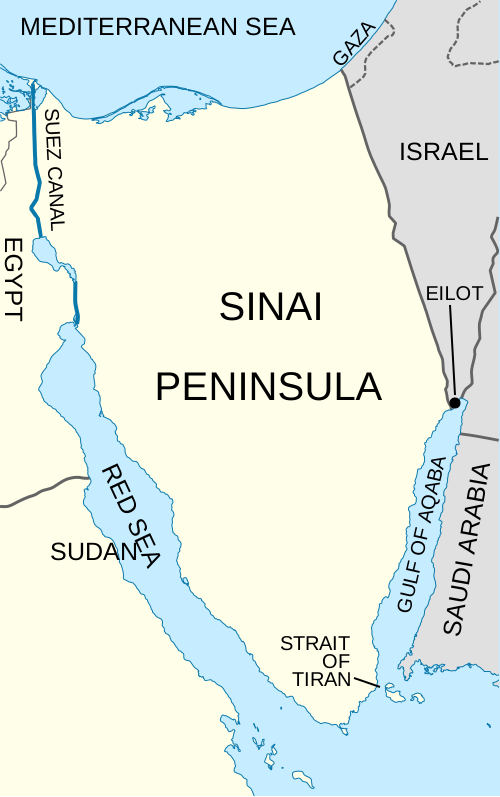
Much of this history centers on the territories included in this map.
The Port of Eilat
The Port of Eilat is Israel's only Port with access to the Red Sea, via the Gulf of Aqaba. From Eilat, ships can reach East Africa, Asia, and the Far East without having to use the Suez Canal. Israel relied on Eilat to export its Dead Sea minerals and potash, and to import Japanese cars.

It was established in 1957. This Wikipedia page explains why Eilat is less important today than it was in the 1950s and 1960s.
1888—Convention of Constantinople

of Egypt
In 1888, a treaty was signed by the UK, German Empire, Austria-Hungary, Spain, France, Italy, the Netherlands, the Russian Empire, and the Ottoman Empire concerning the use of the Suez Canal. The treaty ensured right of passage through the Canal for all signatory countries during times of peace and war.
The canal passed through the Knedivate of Egypt, an autonomous tributary state of the Ottoman Empire, but it had little jurisdiction over the canal. The UK was in control of the canal because the leader of Egypt, Isma'il Pasha (also known as Ismail the Magnificent), sold the UK its shares in the Suez Canal Company.
1896—Theodor Herzl publishes Der Judenstaat
1897—The Bund, a Jewish socialist party, was founded in Russia;
The Bund advocated secular Jewish nationalism, and opposed Zionism.
1916—Sykes–Picot Agreement
This was a secret treaty between the UK, France, Russia, and Italy to agree on how they would carve up the Ottoman Empire once they defeated it. See the Triple Entente for details of how they would achieve this.
Wikipedia: Sykes–Picot Agreement
VIDEO: Sykes-Picot: How and why Britain carved up the Arab world
1917—Balfour Declaration
On November 2, 1917, Arthur Balfour, the British foreign secretary, sent a letter to Lord Rothschild, a leader of the British Jewish community. It said:
His Majesty's Government view with favour the establishment in Palestine of a national home for the Jewish people, and will use their best endeavours to facilitate the achievement of this object, it being clearly understood that nothing shall be done which may prejudice the civil and religious rights of existing non-Jewish communities in Palestine, or the rights and political status enjoyed by Jews in any other country.
The Balfour Declaration: 67 Words that Changed the World
Youtube: Britain Sold Palestine to Pay Its WWI Debt. The Balfour Declaration Was a Banking Deal!
1917—Montagu was strongly opposed to Zionism
Edwin Montagu, was opposed the Balfour Declaration, which he considered anti-Semitic.
1939—White Paper of 1939
In response to the 1936–1939 Arab revolt in Palestine, the British government under Neville Chamberlain issued a policy paper for Mandatory Palestine. It covered the period from 1939 to 1948 when the British departed Palestine.
The paper called for the establishment of a Jewish national home in an independent Palestinian state within 10 years, rejecting the Peel Commission's idea of partitioning Palestine. It also limited Jewish immigration to 75,000 for five years and ruled that further immigration would then be determined by the Arab majority (section II). Jews were restricted from buying Arab land in all but 5% of the Mandate (section III).
1942—Shift from London to Washington DC
According to Ilan Pappé, “There was a shift of power, as far as the Zionist interest is concerned, from London to Washington.”
The Chris Hedges Report: Ilan Pappé: The Rise and Coming Fall of the Israel Lobby
1953—Ben-Gurion Doctrine
David Ben-Gurion outlined a security strategy that focused on three areas: Deterrence, Early Warning, and Decisive Victory. It also includes Preemptive Action: If an existential threat is clearly developing, Israel maintains the strategic right to strike first to preempt enemy aggression. This has been called preemptive war that many find illegal.
From Ben-Gurion to Netanyahu: The Evolution of Israel’s National Security Strategy
1953—Yehud attack/Operation Shoshana/Qibya massacre
In October 1953, the IDF led by Ariel Sharon attacked the village of Qibya in the West Bank and killed more than sixty-nine Palestinian civilians, two-thirds of whom were women and children.
1954—AIPAC is founded
1954—Lavon Affair

Israeli defence minister
An Israeli false flag operation in Egypt had Egyptian Jews plant bombs in Egyptian-, American-, and British-owned civilian targets: cinemas, libraries, and American educational centers. The attacks were to be blamed on the Muslim Brotherhood, Egyptian communists, or others. The goal was to induce the British government to retain its occupying troops in Egypt's Suez Canal zone.
The operation failed and the Israeli defense minister Pinhas Lavon was forced to resign.
Israel defence minister ordered 1954 explosions that hit US, UK targets in Egypt
IDF Archives: The "Unfortunate" or the Lavon affair
1956—Straits of Tiran closure
Israel's port city of Eilat is on the Gulf of Aqaba, which allows access to the Red Sea through the Strait of Tiran. Eilat's port was built starting in 1952 and was able to accept ocean-going vessels in 1956. Egypt blocked Israeli ships from passing through the strait in response to Israeli military operations that attacked and killed Egyptian troops. These are Operation Black Arrow and Operation Elkayam.
Wikipedia: Israeli passage through the Suez Canal and Straits of Tiran
1956—Suez Crisis

1956—Protocol of Sèvres
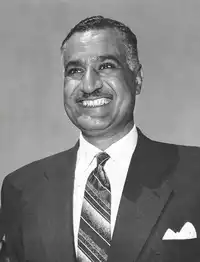
President of Egypt
Between October 22-24, 1956, the governments of Israel, France, and the UK held secret meetings about removing Egyptian leader Colonel Gamal Abdel Nasser from power because of his nationalization of the Suez Canal on July 26. The plan was to have Israel invade Egypt in the Sinai, and Britain and France would then invade on the pretext of protecting the Suez Canal.
This planning and agreement was known as the Protocol of Sèvres and resulted in signed copies of the agreement. Within days, the details of the agreement were leaked but the plan proceeded anyway. Israeli forces invaded Egypt and British and French forces invaded to secure the canal zone.
These negotiations helped Israel to have France commit to constructing the Negev Nuclear Research Center and to supply natural uranium.

Operation Focus
1967—Israel attacks USS Liberty
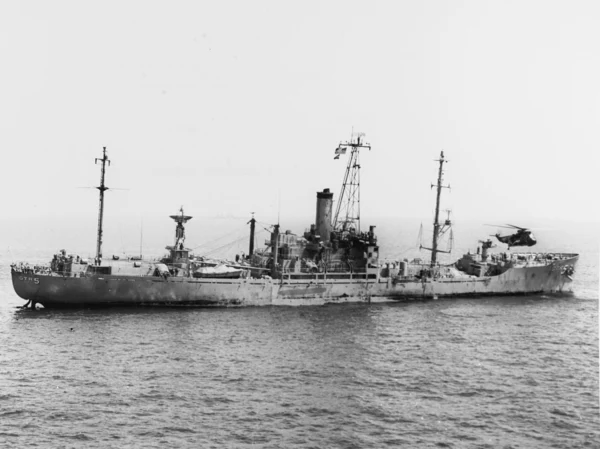
On June 8, 1967, during the Six-Day War, Israeli jet fighters and torpedo boats attacked the U.S. Navy non-combatant ship USS Liberty. Thirty-four of the ship's crew were killed, and 171 were injured. The ship was heavily damaged and was later scrapped. At the time, Israel was an ally of the United States.
There's compelling evidence that the attack was deliberate, and U.S.officials at the time agreed the attack was deliberate.
1978—Vanessa Redgrave Oscar Acceptance Speech
Vanessa Redgrave spoke about Zionist hoodlums.
YouTube: Why Vanessa Redgrave Gave the Most Controversial Oscar Speech Ever
1986—Hannibal Directive
A directive used by the IDF to prevent the capture of Israeli soldiers by enemy forces. If the directive is in force, an IDF soldier is supposed to prevent the capture even if it means killing the fellow soldier who is about to be captured. The full text of the directive was never published. Refer to the Wikipedia page for more detail.
It's been suggested that the Hannibal Directive was in force on October 7, 2023 to explain why the number of Israeli casualties were so high.
1991 October 30—Madrid Conference
This from Wikipedia: "As early as 22 May 1989, U.S. Secretary of State James Baker stated to an AIPAC audience that Israel should abandon its expansionist policies; this remark took many as a signal that the pro-Israel Reagan years were over.:
1995 November 4—Yitzhak Rabin Assasinated
Videos
YouTube: Norman Finkelstein at UMass: Gaza, Truth & the Battle for Free Speech
YouTube: Conversation with Yakov Rabkin, Israel in Palestine: Jewish Rejection of Zionism